How Automation in Travel Software Doubles Efficiency

Travel agencies today face a torrent of tasks: managing bookings, updating prices, following up with clients, and balancing accounting—all often done manually. This leads to errors, delays, and frustrated teams. Travel automation—using specialized travel agency software to automate routine tasks—offers a powerful solution. By offloading repetitive work to the system, agencies can focus on selling trips and serving customers. In fact, automation is now seen as a cornerstone of modern travel operations.
As one industry expert notes, by automating routine tasks, agencies can “save time, reduce errors, and enhance the consistency of their service”. With travel automation, many firms find they can double their operational efficiency, handling more bookings with the same or even fewer resources. This article explores how travel automation achieves that dramatic efficiency boost, and how IvTrip’s integrated travel software can make it happen for your agency.
What Is Travel Automation and Why It Matters
Travel automation means using software to handle common agency tasks automatically. This includes everything from issuing booking confirmations and invoices to sending marketing emails or reminders. Instead of a staff member manually entering data into spreadsheets and juggling multiple systems, a unified platform does it all at the click of a button. Automation streamlines processes: it reduces manual data entry, eliminates duplicate work, and minimizes errors.
For example, if a hotel reservation changes, an automated system instantly updates the itinerary and accounting, preventing overbookings and billing mistakes. The benefit is two-fold: tasks get done faster, and people are freed up for higher-value work (like customer service or upselling).
By handling the grunt work, automation effectively doubles efficiency. Onix Systems reports that with automated workflows, “employees can handle more leads and bookings Companies thus can do more business with the same staff”. In other words, one agent empowered by travel software can achieve the output of two or more manually working agents.
Travelomatix similarly highlights automation’s key role: it “streamlines processes, reduces manual effort, minimizes errors”, leading to much faster, more reliable booking operations. In short, travel automation transforms a busy, bottleneck-filled agency into a swift, error-proof machine.
Key Benefits of Automating Your Agency
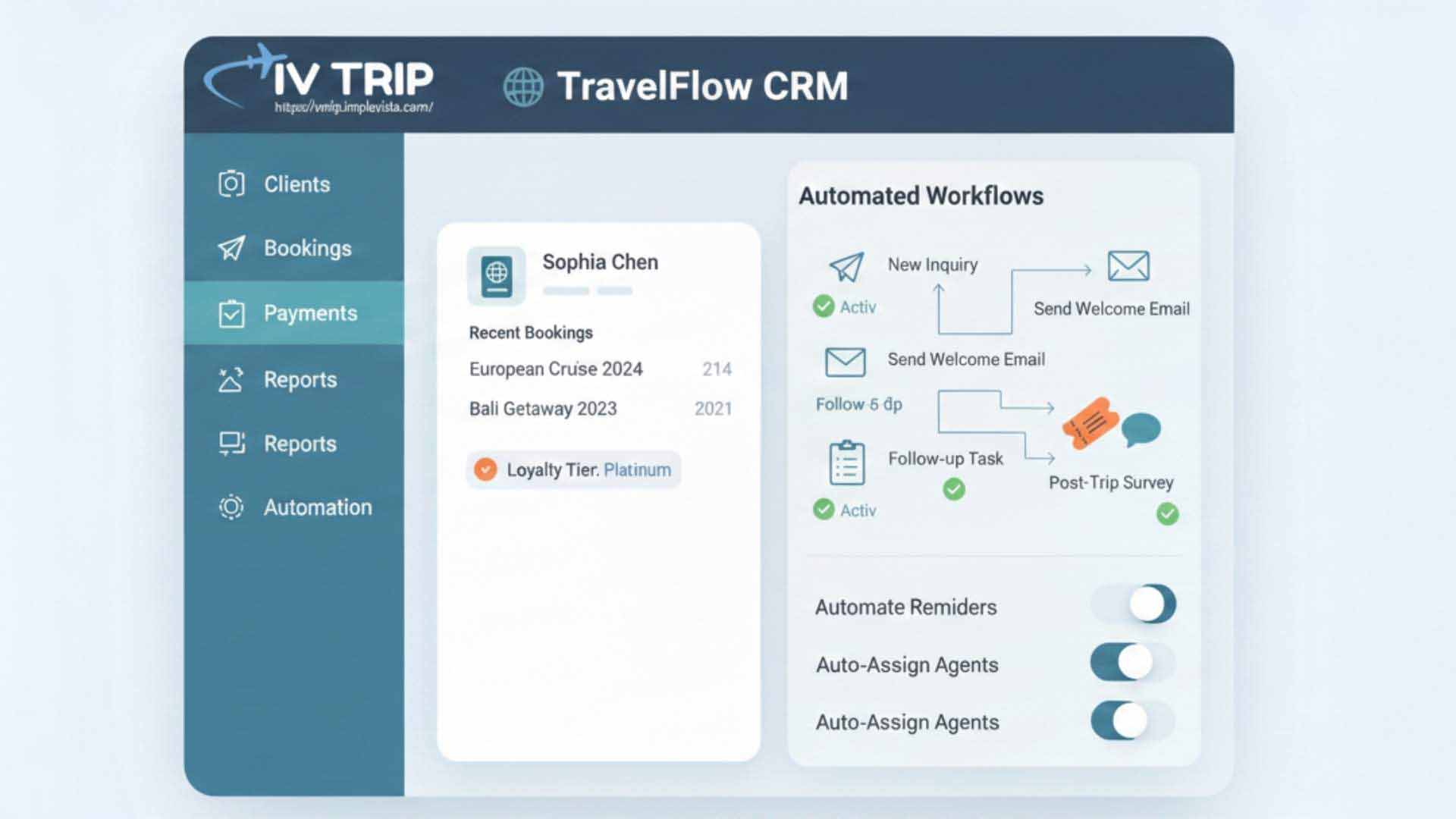
Travel automation delivers many concrete benefits that together explain the “double efficiency” effect. Some of the most important advantages include:
- Time Savings: Automated booking workflows and CRM follow-ups save agents hours every day. Instead of manually emailing each client or updating each reservation, the software does it automatically. One guide notes that automating routine tasks like confirmations and invoices “saves valuable time”. This means agents can process more bookings in the same time frame.
- Fewer Errors: Data entry mistakes and missed steps often plague busy agencies. Automation eliminates these human errors by using rules and integrations. For example, invoicing and commission calculations are done automatically, so nothing is forgotten. Agencies gain “accurate bookings and timely updates” every time.
- 24/7 Availability: Software never sleeps. Chatbots and automated messaging can respond to customer inquiries around the clock, improving service and capturing leads off-hours. Automated booking engines let clients confirm flights and hotels in real time, even outside business hours. This constant availability leads to more sales and happier customers.
- Cost Savings: By cutting manual workload, agencies save on labor costs. Implementing automation platforms can “cut costs by 40–75%” according to travel tech experts. Labor costs in travel continue rising (e.g. up 40% from 2018 to 2023), so eliminating low-value tasks with software directly improves the bottom line.
- Improved Customer Experience: Faster responses and reliable service win customer loyalty. Automated CRM tools send personalized offers and reminders without delay, making clients feel cared-for. For instance, an automated system can “auto-send booking confirmations or up-sell offers” based on client history. Overall, travelers get instant, accurate information (like real-time pricing), and agencies build stronger relationships.
These benefits combine to effectively double efficiency. Staff spend less time on admin drudgery and more time closing deals and delighting clients. An integrated travel platform means that everything from booking to billing flows together seamlessly. As one analyst puts it, automation “improves the speed and efficiency of booking operations” so dramatically that agencies often handle twice as many tasks with the same resources.
How Travel Agency Software Automates Key Tasks
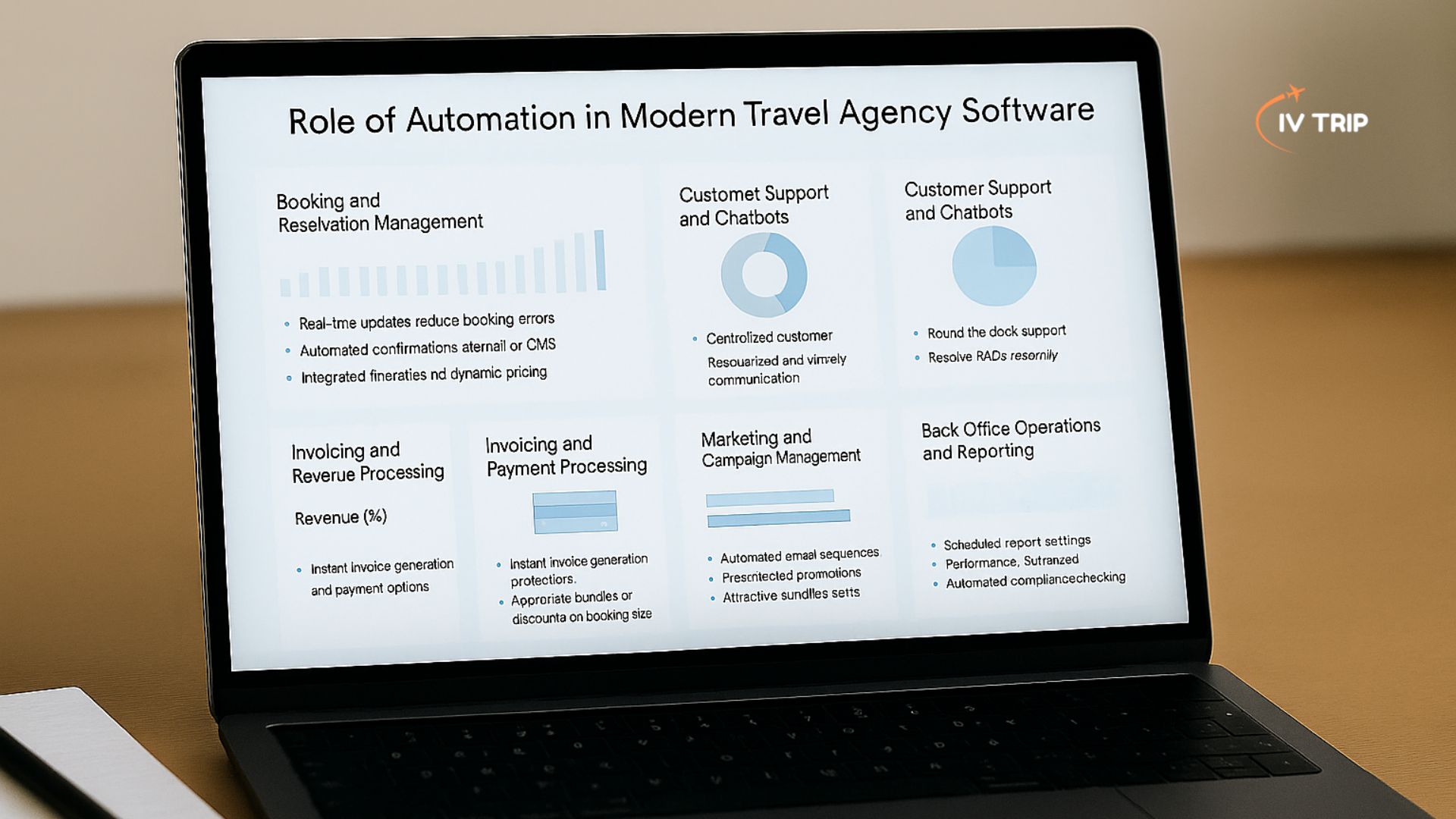
Modern travel agency management systems (like IvTrip) offer built-in automation across all core functions. Here are examples of features and workflows that boost efficiency:
- Real Time Booking & Inventory: Travel software connects to global GDS and hotel APIs to automate flight and hotel bookings. Agents can search live fares and instantly issue tickets on one platform. Any change (cancellation, new booking) is automatically synced across the system. For example, IvTrip’s platform “keeps all trip and inventory data in sync. Every booking update flows into one central system”. If an airline sells out of seats or a hotel rate changes, the software auto-refreshes availability so agents always see accurate data. This real-time sync prevents double-bookings and eliminates the manual task of cross-checking multiple systems.
- Centralized Booking Management: Instead of juggling separate tools for flights, hotels, tours, etc., travel automation consolidates everything. Agents view all reservations on one dashboard. IvTrip offers “One-Stop Booking Management” where “flights, accommodations, tours on one dashboard”. This centralization saves time: an agent no longer needs to switch between tabs or re-enter data. All changes (like confirming a car rental) update itineraries and ledgers automatically. The result is faster bookings with fewer steps.
- CRM and Workflow Automation: Powerful CRMs are essential in travel. Automated travel software tracks every client’s history and triggers actions. For example, IvTrip’s built-in CRM “send[s] follow-up emails, reminders and targeted promotions” automatically. The platform can auto-send booking confirmations or personalized offers based on traveler preferences. Routine workflows—like moving a lead to “booked” status or reminding a customer to pay—run on predefined rules. As one IvTrip report notes: “Workflow Automation: Routine tasks like itineraries, invoices and status updates are automatically handled by the system”. In practice, this means less manual checking and more on-time communication. Agencies using such automation find that no opportunities are missed, and staff spend more time on value-added work.
- Automated Invoicing and Accounting: Financial tasks often bottleneck agencies. Good travel software automates them. Every confirmed trip triggers an invoice and payment record without human input. IvTrip’s finance module, for example, “auto-generates invoices and receipts for each confirmed trip”. Commissions and markups are calculated automatically too. The system keeps multi-currency ledgers and taxes in order. This means agencies never need separate accounting software and avoid spreadsheet errors. Automation here ensures payments are tracked and reminders sent on schedule. As a result, invoicing that once took hours is now instantaneous, greatly improving cash flow.
- Commissions and Reporting: Paying agents and tracking commissions is complex. Automated solutions handle it elegantly. Software can apply commission rules automatically when a sale is made, and generate payout reports without spreadsheets. Dashboards show real-time agent earnings. This cut manual reconciliation time and avoided underpayments. On the reporting side, travel software provides live analytics dashboards. Agencies can see top-selling packages, revenue trends, and operational alerts at a glance. Custom reports (like weekly sales summaries) run automatically too. With data continuously updated, managers react faster. One report noted that built-in BI dashboards make decision-makers “more agile”, letting the agency adjust strategy quickly.
By automating these key tasks, travel software effectively doubles productivity. Agents no longer copy-paste details or chase down payments manually. Everything happens in one system, saving countless hours. As one summary of IvTrip’s tools explains, the platform “eliminates siloed systems and manual work”, letting agencies “save time, reduce errors, and improve customer service by automating routine tasks.” In practice, an agent can process twice as many bookings or clients in a day, because the software handles all the repetitive steps invisibly.
Implementing CRM with Workflow Automation
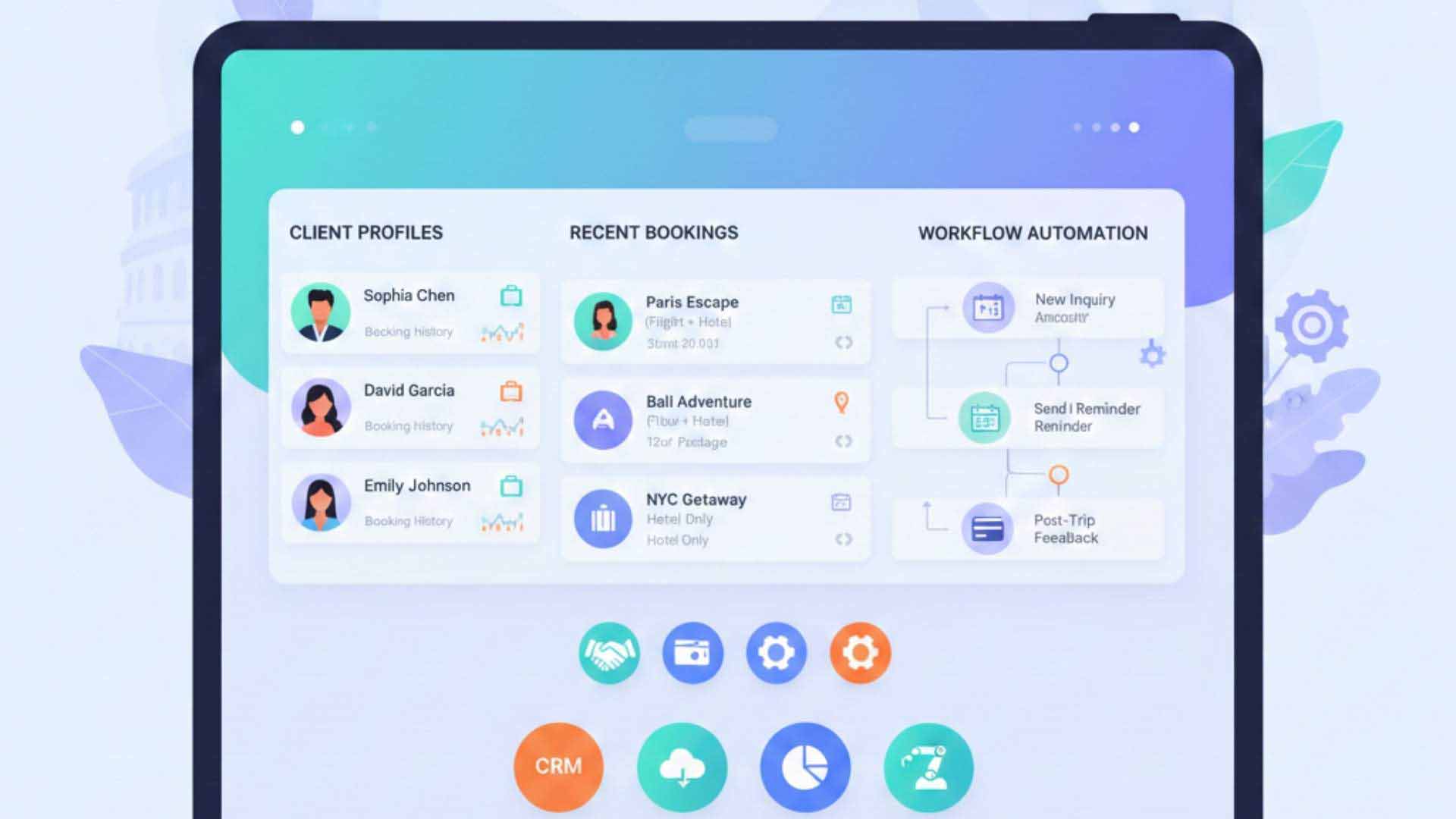
A vital aspect of travel automation is integrating CRM with workflow automation. A specialized travel CRM captures leads, client details, and booking history in one place. It then powers automated workflows. For example, once a trip is booked, the CRM can immediately schedule a follow-up task to ask the customer for feedback after travel. If a lead goes cold, automated email campaigns can be sent. By connecting customer data with operations, agencies ensure nothing slips through the cracks.
Travelomatix notes the key effects: automation “minimizes the need for manual data entry and processing”, letting companies handle large volumes quickly. Automation can even double a team’s effective capacity. For instance, with automated reminders and alerts, one agency found they could “manage twice as many bookings without hiring additional staff”.
Moreover, chatbots on agency websites can handle FAQs instantly, pushing those leads into the CRM system for agents to follow up. The result is a fully coordinated workflow: marketing, sales, and support all work together through automation. This alignment directly boosts operational efficiency and conversion rates.
Real Time Bookings and Operations
Another pillar of efficiency is real-time capability. Travelers expect instant answers and up-to-the-minute availability. Modern travel software connects in real time to Global Distribution Systems (GDS) and supplier APIs. This means agents and customers see live inventory for flights and hotels.
According to travel benchmarks, features like “live fares, schedules and seat availability” are now expected in a competitive travel agent tool. When a booking is confirmed on the spot, the system instantly updates itineraries, inventories, and accounts.
For example, IvTrip’s system lets an agent issue a ticket and immediately logs the sale and updates inventory “on the fly”. Likewise, hotel room searches return current rates and availability, and a single click generates the hotel booking and voucher. All this happens automatically, so data is always current.
A study of travel automation highlights that the result is “faster responses, accurate bookings, and timely updates”, leading to higher customer satisfaction. In effect, there’s no lag time between a customer’s request and the agency’s action, which significantly speeds up service delivery.
Agents also benefit: they see consolidated dashboards of all bookings and tasks. Tools can automatically assign new reservations to available staff and alert them. This ensures no request is overlooked. The time saved on booking management alone can be massive, effectively halving turnaround times.

Advanced Analytics and Decision-Making
Efficiency gains aren’t only operational; automation also doubles efficiency in planning and strategy. Travel software captures data from every automated process, creating a goldmine of information. Powerful reporting tools in these systems turn that data into insights.
For instance, IvTrip provides real-time analytics on everything from most-booked destinations to revenue per package. Managers can see live charts of sales and occupancy, or get automated alerts if something looks off. In practice, this means decisions get made faster and with more accuracy. Agencies can quickly discover, say, that a particular tour is trending this month and boost marketing accordingly.
The ZentrumHub guide on travel software emphasizes how analytics tie into automation: integrated analytics “can track customer behavior, booking patterns, and revenue sources, enabling agencies to refine their services”. With automated reporting, agencies can flag anomalies (like a sudden drop in bookings) immediately.
This predictive edge prevents lost opportunities. As one travel executive noted, dashboards let you “quickly see which tours are most profitable and forecast future demand”.
Ultimately, automation not only speeds up current tasks but also empowers agencies to continuously improve. By saving time on routine work, staff can use these analytics to craft new packages, personalize marketing, and make data-driven decisions – further boosting productivity and growth.
Doubling Efficiency in Action: IvTrip’s Approach
IvTrip, IvTrip’s travel agency management system by Implevista, exemplifies how software automation yields double efficiency. It bundles flights, hotels, CRM, accounting, and more into one cloud platform. Because all modules share the same database, every automated action immediately reflects across the agency.
Book a flight, and an invoice is created; mark a task done, and the itinerary updates. This all-in-one design prevents the “siloed systems” that waste time in many agencies.
Customers of IvTrip report dramatic efficiency gains. One agency cut its quote turnaround time by half and saw a 40% reduction in booking errors after automation implementation. (Automation features like auto-generating quotes and reminders remove friction at each step.) Another tour operator found its team could handle double the normal booking volume without adding agents, simply by automating lead distribution and supplier follow-ups.
These results are not surprising: IvTrip is built to automate virtually every routine travel task. From “auto-send booking confirmations” and up-selling offers, to automatically assigning tasks in workflows, the software does it all. Travel analysts note that adopting such tools allows a travel agency to “centralize operations and eliminate manual work, resulting in faster service and fewer errors”.
In practice, this means an agency using IvTrip can scale up its workload almost effortlessly. They see bookings, inventory, finances and customer data synced in real time, literally letting them do more with the same staff and processes.
Implementing Automation: Best Practices
To truly double efficiency, agencies should implement automation thoughtfully. First, map out your existing workflow and pinpoint pain points. Then choose software modules to target those areas. For example, if lead follow-up is slow, start by automating email reminders. Next, gradually expand: integrate inventory connectors for real time rates, and set up workflow rules so that every booking triggers the next steps automatically.
Training is key. Staff must trust the system. Many agencies start with one module (like CRM) and expand. As IvTrip experts advise, ensure your team “understand the benefits: less manual work, fewer errors, and more time for sales and relationship building”. Monitor key metrics (lead response time, conversion rate, etc.) before and after to measure the impact. Agencies often find that goals like “reduce quote turnaround by 50%” are quickly achieved once automation is in place.
Finally, continually refine. Set up dashboards and alerts so that when something isn’t working (e.g. overdue tasks), you catch it early. Use the system’s reporting to re-balance workloads or negotiate with underperforming suppliers. In this way, automation is not static – it evolves with your business, ensuring the efficiency gains continue growing over time.
Frequently Asked Questions
Q: What tasks can travel software automation handle?
A: Travel software can automate many routine tasks: search and book flights/hotels in real time, generate itineraries and invoices, send confirmation emails, update customer records, schedule follow-up reminders, and even issue marketing campaigns. Anything that follows a rule-based or repetitive process can be automated to save time.
Q: How does travel automation improve operational efficiency?
A: By eliminating manual work and speeding up processes. For example, real time API connections mean agents don’t retype bookings, and CRM workflows automatically nurture leads. This reduces errors and frees staff to focus on selling. Many agencies report being able to handle twice as many bookings with automation thanks to the time saved on administrative tasks.
Q: What is CRM with workflow automation in travel software?
A: It’s a system that manages customer data and automatically triggers actions. For instance, when a trip is booked, the CRM might auto-send a thank-you email and create a post-trip review task. Integrating CRM and workflows means customer interactions, bookings, and follow-ups all happen seamlessly, improving customer service and efficiency.
Q: Can travel automation reduce errors?
A: Yes. When data flows automatically between systems (bookings to itineraries to accounting), there’s no need to re-enter information. Automated checks (like validating payment info) catch mistakes early. For example, software can flag unavailable seats before confirming a booking, avoiding human oversight. The result is far fewer booking or billing errors.
Q: What is the ROI of travel software automation?
A: Many agencies see rapid returns. Common statistics show automation can cut workload by 40–85%, leading to savings on staffing and more sales capacity. The cost of the software often pays for itself in months through increased bookings, repeat customers, and lower operational costs.
Q: How is real time booking handled in automated travel software?
A: Travel automation platforms connect directly to GDSs and supplier APIs. This lets agents search live inventory and issue tickets immediately. The software then automatically updates the inventory, itinerary, and customer records. In IvTrip’s case, a flight ticket is issued and the customer’s itinerary and financials are updated “on the fly”.
Q: Is cloud-based software faster and more efficient?
A: Absolutely. Cloud travel software like IvTrip is built for speed and reliability. It delivers instant updates and uses global servers to ensure fast performance (no slow local installations). The cloud also means you get automated performance monitoring and core web vitals optimization without effort. Agents can work from anywhere on any device, keeping the workflow uninterrupted and efficient.
Q: Can automation help with marketing and customer retention?
A: Yes, many travel platforms include marketing automation. For example, IvTrip can automatically send targeted email campaigns, birthday messages, or promotional offers based on customer data. This personalized outreach runs on autopilot, keeping customers engaged and freeing agents from manual marketing tasks. It leads to higher repeat bookings without extra work.
Q: How do I get started with travel software automation?
A: Start by defining your goals (e.g., halving quote time or boosting repeat rates). Then audit your current processes and identify tasks to automate (booking, invoicing, follow-ups, etc.). Choose a travel software (like IvTrip) that integrates CRM, accounting and booking. Implement in phases: import data, set up workflows, and train your team. Keep measuring metrics to ensure you’re meeting efficiency targets.
Q: Can small travel agencies benefit from automation?
A: Definitely. Even a small agency can double its efficiency with automation. With a limited team, automating booking confirmations, client reminders, and reports means each agent accomplishes much more. A built-in CRM ensures no lead is lost, and integrated booking tools let agents offer more products without extra staff. In short, automation levels the playing field and allows small agencies to compete with bigger firms.
Travel automation is a game-changer for modern agencies. By automating booking workflows, CRM follow-ups, invoicing and more, an agency can effectively double its efficiency. Agents spend less time on paperwork and more time closing deals and serving customers. With real time inventory sync, built-in CRM and analytics, IvTrip’s travel agency software shows how this transformation happens in practice. If you’re ready to streamline operations and multiply your productivity, it’s time to embrace automation.
Ready to transform your agency? Contact IvTrip today to see how our travel automation platform can cut workload and boost bookings. Visit our Travel Agency Management System page or request a demo to get started. Don’t forget to subscribe to the Implevista blog for more insights, and check out our related guide on Simplifying Travel Agent Commissions to learn how IvTrip can automate your commission management and further amplify efficiency.