

5 Reasons Your Travel Agency Needs a Travel App

Mobile technology has transformed how people book and experience travel. Today, over 90% of travelers rely on smartphones at every stage of their journey. From searching flights to checking itineraries, travelers use apps first – and travel agencies must follow suit. A mobile-first travel agency app puts your services in the traveler’s hand, providing convenience, real-time updates, and personalization.
In this mobile era, agencies without an app risk losing customers to competitors who offer on-the-go booking and support. This article explores why travel agencies need a travel app, the benefits of mobile technology in travel, and how a well-designed app improves customer experience and boosts your business. We’ll look at industry trends, user expectations, and practical features to build a winning mobile travel app strategy.
The Mobile Revolution in Travel
The travel industry has gone mobile-first. Research shows that more than 85% of global travelers own smartphones, and of those, about 32% book flights or travel services directly on their phones. By 2025, nearly three-quarters of all travel bookings will occur online, with 45% of those via mobile phones.
Travel app usage is exploding: a recent report found 4.2 billion travel app downloads in 2024, a 3% year-over-year increase, and users spent over 20 billion hours in travel apps. This growth mirrors a huge market opportunity: the global travel app market was about $650.7 billion in 2024 and is projected to reach ~$3.55 trillion by 2034 (18.5% CAGR). In the U.S. alone, travel app revenue hit $185.3 billion in 2024.
These numbers tell us two things: travelers want and use mobile solutions, and travel agencies can tap into this trend. For instance, research by Booking.com found 62% of travelers prefer using digital tools for planning and booking their trips.
Likewise, a Phocuswire survey showed 61% of U.S. travelers use their smartphone to book and pay for travel, and 64% use their phones while en route. In short, a robust travel app aligns with user behavior and expectations. Mobile booking solutions – from flight/hotel search to e-tickets – have become essential in digital travel.
- Travel trends: Smartphones and apps are now integral. 90%+ of travelers use mobile, driving 72% of all bookings online.
- User behavior: Over half of travelers have at least one travel app on their phone, and apps often outperform mobile websites. Mobile offers on-the-go updates (70% of travelers prefer mobiles for booking updates).
- Market growth: The travel app sector is booming (18.5% CAGR to 2034) as younger travelers favor apps for convenience and personalization.
Travel agencies ignoring this shift risk falling behind. Mobile first means designing services and booking tools primarily for smartphones. It isn’t just a nice add-on – it’s a business imperative as global travel becomes increasingly digital. According to industry analysis, 72% of 2025 travel bookings are online, and nearly half occur via mobile.
Agencies must ensure their systems support mobile accessibility and meet traveler expectations. In the next sections, we’ll see how a travel app delivers on these trends by improving user experience and agency efficiency.
Why Travel Agencies Need a Mobile-First App to Improve Customer Experience
Travelers today expect seamless, mobile-friendly experiences. Think of how apps like Google Travel or TripIt simplify planning: providing itinerary access, real-time updates, maps, and offline info. Agencies that offer similar conveniences can greatly enhance customer experience. In fact, some industry experts say having travel apps as a “traveling assistant” is now almost mandatory. A mobile travel app gives your customers 24/7 control over their trips – they can search and book on their schedule, receive instant alerts, and even use offline travel guides.
Key ways a mobile-first travel app boosts customer experience:
- Anywhere, Anytime Access: Clients can browse packages, compare options, and book flights or hotels right from their phones. No need to visit the office or log in on desktop. For example, IV Trip’s platform highlights “Mobile Compatibility”, enabling travelers to book on-the-go with a responsive app interface.
- Instant Updates & Notifications: Apps can push real-time alerts (flight delays, gate changes, booking confirmations). Push notifications increase traveler confidence – Amadeus research found that mobile apps (with alerts and contactless payment) were the tech travelers most want. Keep clients informed directly through the app to improve satisfaction.
- Personalization: By integrating your CRM, the app can remember preferences and past trips. Agencies can push personalized promotions (e.g. loyalty discounts) and tailor suggestions. According to industry surveys, travel apps strengthen loyalty – 66% of travelers never delete a travel app once downloaded, giving agencies a persistent channel to engage.
- Offline Functionality: Even without internet, travelers can access itineraries, maps, and e-tickets. This on-demand service is valued by users on the move. 70% of users prefer travel apps because they offer quick info access and the ability to use the app offline.
- Convenience and Trust: A travel app streamlines bookings, payments, and confirmation. This builds trust: 53% of leisure and 85% of business travelers keep travel app notifications on because they find them useful for updates. The easy, app-first experience means they are more likely to book again with your agency.
Internally, a mobile app also helps your team. With an on-brand app, travel agents can communicate changes via the same interface, send automated reminders, and even offer in-app customer support. Altogether, customer experience improves significantly when travelers can interact with your agency through a dedicated app.
IV Trip exemplifies this approach. As one internal source notes, “IV Trip is fully optimized for mobile devices, allowing you to manage bookings and access services on the go.”. In other words, with a travel app, your agency is always in the customer’s pocket.
Key Features of an Effective Travel App for Agencies
Not all apps are equal – the best travel agency apps include features that address real customer needs. Here are essential components to look for in a travel app:
- Real-Time Booking Engine: Live integration with global distribution systems (airlines, hotels, car rentals) is crucial. This ensures your app shows up-to-date availability and pricing. For example, IV Trip’s Real-Time Flight Booking feature connects to GDS for instant schedules and prices. Clients can search and book in seconds.
- Itinerary Planner: A robust itinerary module lets users view, edit, and share their entire trip plan in one place. This should include flights, hotels, tours, etc., similar to the “Trip Organization” tool in IV Trip. It can even allow offline access. Codebridge notes itinerary management as a must-have for agencies, enabling travelers to check plans anytime, anywhere.
- Advanced Search & Filters: Allow customers to easily find flights, hotels, or packages by date, budget, location, or preferences. According to experts, a travel app should have “advanced search filters” and multi-city booking options. For instance, let users search flights by airline, time, or price range directly in the app.
- Secure In-App Payments: Integrate trusted payment gateways for credit card or mobile payments. A seamless checkout with saved payment info enhances convenience. Travelers need confidence their data is safe (over 40% cited contactless mobile payments as a key tech feature).
- Push Notifications & Alerts: Built-in alert system for flight reminders, gate changes, or special deals. Personalize notifications (e.g. send a push about a hotel discount in their destination). As Zoftify’s travel stats show, travelers keep notifications on for price changes and trip updates, which helps agencies drive engagement.
- Multi-Lingual and Currency Support: International travelers value apps in their language and currency. This expands your market and makes booking smoother for non-English speakers.
- CRM Integration: Sync the app with your Customer Relationship Management. This enables personalized content (e.g. push a beach holiday to a warm-climate lover) and automates follow-ups. A CRM-driven app can alert agents when a customer needs attention, improving service. (IvTrip’s CRM features support this integration.)
- Data Analytics Dashboard: Although behind the scenes, the agency should have an admin panel to track user behavior in the app. Knowing what services users browse or which offers they click on will guide marketing and product decisions.
In short, a great travel app combines real-time booking functions, user-friendly design, and smart notifications. Internal sources also highlight IV Trip’s focus on mobile: their OTA platform emphasizes a “fully responsive system optimized for smartphones and tablets”.
Travel App Benefits and Business Impact
Adopting a travel app isn’t just about pleasing customers – it has clear business payoffs. Here are major benefits of a mobile travel app for agencies:
- Increased Bookings and Revenue: As customer engagement rises, agencies often see a sales lift. Big travel brands report large mobile revenue shares – for instance, in 2022 Booking.com generated ~$9 billion via mobile (over half its revenue). With a compelling app, your agency taps this trend. Apps encourage impulse bookings and cross-sells (e.g. suggesting excursions after a hotel reservation).
- Competitive Edge and Brand Loyalty: Stand out from competitors. Many agencies still rely on websites or phone calls; offering a mobile app positions you as tech-forward. With an app on the customer’s phone, your brand is visible daily. As Zoftify notes, once travelers download an agency’s app, 66% never delete it. That means more opportunities for repeat business and referrals.
- Better Customer Data: Apps let you gather rich data on user behavior (search queries, frequently booked routes, preferred hotels). This data-driven insight informs personalized marketing. For example, by tracking in-app actions, you can create targeted email campaigns or push new deals to a specific user segment.
- Lower Acquisition Costs Over Time: While building an app requires investment, it can reduce marketing costs in the long run. Push notifications and in-app offers are essentially free and can replace expensive ads. Plus, satisfied app users become repeat customers. According to industry experts, retaining and upselling to an existing app user is far cheaper than acquiring a new customer through ads.
- Streamlined Operations: Internally, mobile apps can tie into your agency’s back-end (inventory management, accounting, etc.). Staff can manage bookings and client communication from the same platform. This efficiency translates to cost savings. One example: automatic itinerary updates to customers cut down phone and email support time.
- Global Reach: With a travel app, your agency is no longer limited by geography. Travelers worldwide can download and use it. Given that the global travel app market is growing rapidly, there are opportunities in underserved regions or niches. Mobile-first design means your agency can capture bookings even from international clients (especially if you support multiple languages/currencies).
Citing research: Forbes-type analysts emphasize that mobile travel apps boost customer confidence and booking frequency. For example, Amadeus found 44% of customers said in-trip notifications via mobile apps would increase their confidence in travel. Also, Push notifications have ROI – 53% of leisure travelers keep them on for fare alerts and updates.
Ultimately, a travel app multiplies the effectiveness of your marketing and service. It helps digital transformation by bringing your entire offering into one app interface. This aligns with long-term industry forecasts: by 2025, the travel market will see $100B+ in online bookings in regions like South Asia, and agencies with robust mobile platforms will tap a large share of it.

Implementing a Travel App: Best Practices
Building or choosing a travel app should follow a strategic approach. Here are practical guidelines:
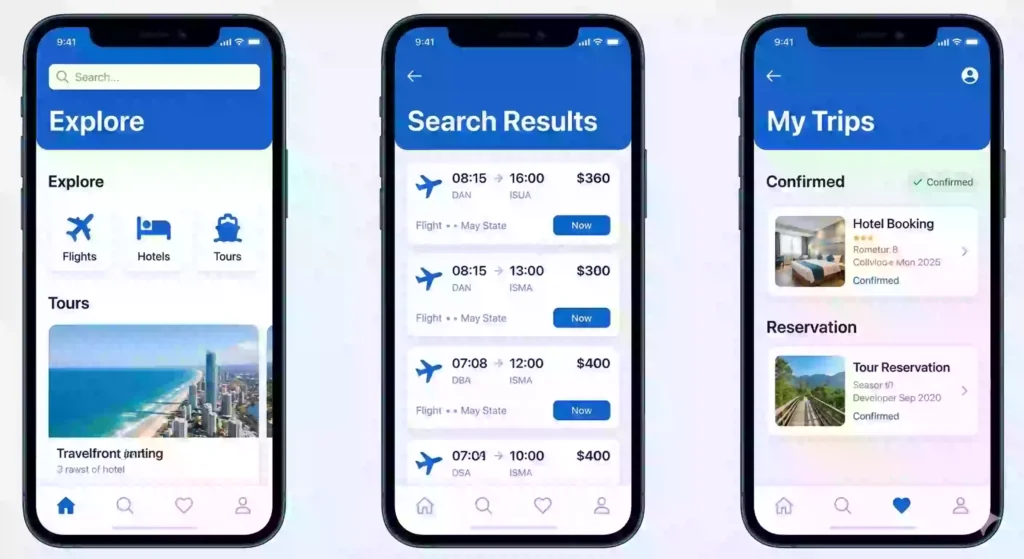
- Mobile-First Design: Ensure the app is user-friendly on smartphones above all. Interfaces should be clean, with clear icons (flights, hotels, tours, etc.), large touch targets, and minimal text. Conduct testing on various devices. As one digital strategy guide notes, mobile-first means the app must be “fast, intuitive, and optimized for all devices”.
- Optimize Performance: App speed and reliability are crucial. Users expect instant loading. Use techniques like image compression (WebP/AVIF), lazy loading, and caching to meet Core Web Vitals standards. The travel app must work smoothly even in low-bandwidth scenarios; offline access (e.g. caching itinerary) is a plus.
- Security and Privacy: Integrate secure authentication (e.g. OAuth, token-based logins) and PCI-compliant payment processing. Clearly communicate security measures to users. Data encryption for personal info is mandatory. Also, comply with travel data regulations (GDPR for Europe, etc.) to build trust.
- Seamless Integration: Connect the app to your existing travel systems – flight/hotel APIs, CRM, email platforms. For example, every booking made in the app should sync with your back-office inventory. This ensures up-to-date data and avoids double-booking. Also integrate with the agency’s website – for instance, if a user starts booking on desktop, they can continue on mobile.
- Personalization & AI: Use analytics and (if possible) AI/ML for recommendations. Suggest relevant packages (based on past trips) or highlight special offers. Chatbots can be integrated for 24/7 support in the app. For example, a chatbot might suggest excursions when a user views a hotel.
- Regular Updates and Testing: The travel app should evolve. Release updates with new features or UI improvements regularly. Use analytics to guide updates. Continuously test across device types and solicit user feedback.
- Marketing Integration: Promote the app to existing customers (e.g. on email newsletters or via SMS). Encourage downloads by offering an app-exclusive deal. Inside the app, use in-app messaging for promotions. Also cross-link the app download from your agency’s website and social media.
- Customer Support: Include easy ways to contact support from within the app (call, chat, email). If clients face issues, quick support builds loyalty.
By following these best practices, an agency can ensure its travel app is a robust, user-friendly channel. Ultimately, the goal is to make booking and managing travel as easy as using popular consumer apps, aligning with what travelers now expect.
In a mobile-first world, travel agencies need a mobile-first strategy. A dedicated travel app is no longer optional – it’s a competitive requirement. We’ve seen that modern travelers expect seamless, personalized mobile experiences (over 60% prefer digital tools for planning). Agencies that provide an app gain convenience and engagement, driving bookings and loyalty.
Key takeaways: Travel apps empower customers with on-demand booking and real-time updates. They help agencies streamline operations, collect valuable data, and strengthen their brand. The industry data is clear – travel app usage and revenue are skyrocketing, and mobile-first agencies will capture the lion’s share of the market.
Ready to go mobile-first? At IvTrip, our travel software solutions include mobile booking features and a full mobile app, helping agencies deliver these benefits immediately. Contact IvTrip today to schedule a demo or learn how a custom travel app can transform your agency.

FAQs
Q: Why do travel agencies need a travel app?
A travel app lets customers book and manage trips from their phones. It meets the modern traveler’s expectations – quick search, instant booking, and real-time updates. Research shows most travelers use smartphones for booking. Having an app improves convenience and loyalty, making it easier to attract and retain clients.
Q: How does a travel app improve customer experience?
A mobile app offers 24/7 access to services, push notifications for flight/hotel alerts, and personalized features (saved preferences, tailored deals). Customers enjoy on-the-go itinerary access and offline maps, which build trust. For example, clients can view e-tickets or updates even without internet, simplifying their journey.
Q: What are the key features of an effective travel agency mobile app?
Essential features include real-time flight/hotel booking, itinerary planning, advanced search filters, secure in-app payments, push notifications, multi-destination booking, and integration with the agency’s CRM. These let users find and book trips easily. According to industry guides, “advanced search filters, real-time availability, secure payments, itinerary management” are must-haves.
Q: What are the benefits of mobile booking solutions for agencies?
Mobile booking solutions increase reach (agents can serve customers anywhere), boost revenue (many bookings shift to mobile), and improve brand engagement (apps keep your agency top-of-mind). Agencies also gain customer data for targeted marketing. In short, apps create a new sales channel and improve operational efficiency by automating tasks.
Q: How does a mobile-first strategy benefit travel agencies?
A mobile-first approach means designing services with smartphones as the priority. This ensures your agency’s system is user-friendly and fast on mobile. Since 72% of bookings are online and 45% on mobile, optimizing for mobile grows market share. It also enhances SEO and digital presence, as mobile-friendly platforms rank better and offer better user experience.
Q: How much does it cost to develop a travel app?
The cost varies by complexity and features. Basic travel apps might start from a few thousand USD, while fully custom apps with real-time GDS integration and advanced UI can cost more. Many agencies begin with customizable off-the-shelf apps and invest in custom development as they grow. Discuss your requirements with a developer to get an accurate estimate.
Q: What is the ROI of a travel app for my agency?
ROI depends on adoption, but apps can pay off through increased bookings and repeat business. For example, major agencies generate a significant portion of revenue via mobile (Booking.com earned ~$9B from mobile alone). Even a small boost in conversions or client retention from the app can quickly cover development costs. Plus, apps lower marketing costs per customer in the long run.
Q: Should I build a custom app or use a travel portal’s responsive website?
A responsive website is a good start, but a native app provides better engagement (faster, offline access, push notifications). Many agencies start with mobile-friendly sites and then launch an app when they see demand. Custom apps give full branding and unique features, while templated apps are quicker. Consider your budget, audience, and needs: clients who travel frequently or corporates often prefer dedicated apps for convenience.
Q: How can a travel app help with digital transformation?
A travel app is a cornerstone of digital transformation for agencies. It modernizes your sales channels, collects real-time data, and automates customer interactions. By integrating the app with your back-end systems (CRM, booking engine, accounting), you create a seamless digital workflow. This transformation enables scaling your business and responding faster to market trends.
Q: Are mobile travel apps secure for customers?
Yes, when built correctly. A reputable travel app uses encryption (HTTPS/TLS), secure authentication, and complies with data privacy laws. Payment processing should be PCI-compliant. Always choose or develop an app with strong security practices. When travelers see that an app keeps their data safe and transactions protected, they’re more comfortable booking through it.