
Simplified Trip Organization: Booking Made Simple

Simplified Trip Organization: How Travel Agency Software Eliminates Booking Chaos
Planning and booking trips manually can quickly become a headache. Agents juggle flight schedules, hotel bookings, tour details, and endless forms – often across multiple spreadsheets or tools. This fragmented approach leads to mistakes like double-bookings, missed confirmations, and angry customers. Today’s travel agency software replaces this chaos with a centralized booking system that brings all reservations into one place. By uniting flights, hotels, transfers and activities under a single dashboard, agencies achieve simplified trip organization and keep travel planning on track.
A centralized travel planning setup (maps, camera, notes) represents how modern travel software helps organize itineraries and bookings.
Simplified Trip Organization: Challenges of Manual Travel Operations
Traditional travel agencies often rely on spreadsheets, email, and separate booking sites – a recipe for chaos. Staff spend hours manually entering data and cross-checking availability. As one industry study reports, 91% of agencies juggle four or more different booking systems, with over half using seven or more. This sprawl drives up costs and leads to errors. For example, without a unified system, agencies can overbook rooms or forget to send confirmations. Multiple tools also make data inconsistent: one agent might have different availability info than another. Customers suffer too – delayed responses and miscommunications erode trust. In short, siloed workflows and data fragmentation create frustration for staff and clients alike.
- Overlapping bookings and errors from manual entry.
- Time is lost switching between siloed tools and websites.
- Difficulty tracking customer requests and payments.
- Inconsistent availability data across channels.
Agencies clearly want simplicity. As Sabre’s global survey found, travel companies today “want unified access” to content and a streamlined process. Modern travel software delivers this by centralizing everything on one platform. Instead of chaos, agents gain a single “source of truth” for every trip detail. This consolidation is the first step toward simplified trip organization.
Centralized Booking System: One Platform for Everything
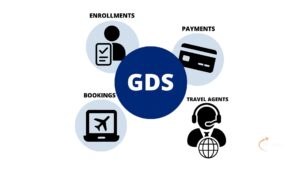
A core benefit of travel agency software is its integrated booking engine. This centralized booking system lets agents search and book flights, hotels, car rentals, and tours all from one interface. Real-time inventory from Global Distribution Systems (GDS) and local suppliers updates instantly, preventing overbookings. For example, IV Trip’s platform aggregates airline, hotel, car, and tour data into one dashboard. Agents can see live rates and availability across suppliers, then book directly on the spot. This eliminates the need to toggle between GDS terminals or external sites.
With centralization:
- Agents avoid conflicting reservations and manual entry errors.
- Confirmations and booking details are automatically synced, keeping customers informed.
- The system updates availability everywhere at once, reducing canceled or missed bookings.
In practice, an all-in-one booking system means no more juggling. One recent vendor (Roverd) notes that its software replaces chaos “with a single, centralized dashboard,” automating confirmations and reminders to avoid double-bookings. This unified approach not only streamlines operations but also ensures every trip element – flights, hotels, transfers – is coordinated in one place. As a result, travel plans become fully transparent and easy to manage.
Itinerary Management System: Streamlining Trip Plans
Beyond bookings, modern travel software includes a powerful itinerary management system. This tool helps agents assemble day-by-day travel plans with ease. Instead of piecing itineraries manually, software can automatically compile flights, accommodations, and activities into cohesive routes. For instance, a tour itinerary module allows agents to drag-and-drop attractions or services into a daily schedule, instantly calculating totals and travel times. Such tools can pre-load templates for common trip types (honeymoons, group tours, etc.) and customize them quickly.
According to industry experts, itinerary-building software is key to great service. It combines partners’ offers into complete routes and makes it simple for travelers to see all trip details. Features often include:
- Multi-day itinerary templates that can be personalized for each client.
- Automatic inclusion of confirmed booking details (flight numbers, check-in times).
- Add-ons like restaurant reservations, tour tickets or transfer info with one click.
- The ability to save and reuse itineraries as templates.
This sophisticated itinerary management eliminates another source of chaos. Agents no longer need to manually email each client all details. Instead, the system generates clear, branded itineraries (often with rich maps and images) that customers can access online or download as PDFs. As one guide explains, a well-designed tour planner
“provides the best options for tours, … fast travel booking system with easy change and cancel function,”
all the up-to-date information. In effect, the itinerary management system ensures each trip is organized, complete, and flexible, leaving no detail overlooked.
Powerful CRM and Automation: Keeping Everything Organized
A unified system wouldn’t be complete without built-in customer management. Travel agency software typically includes a CRM (Customer Relationship Management) module tailored for travel. This means every client’s profile, booking history, preferences, and communications are stored in one place. Agents can see, for any traveler, past trips and special requests instantly. This empowers personalized service – for example, the software can automatically send an email reminder when it’s time for a passport renewal or propose a package upgrade based on a customer’s history.
By automating routine tasks, these systems free agents to focus on customers. Many platforms automate invoicing, payment reminders, and email follow-ups. For instance, when a booking is confirmed, the system might immediately generate an invoice, send a confirmation email with a QR code for check-in, or alert staff to special requests. Automation dramatically cuts down manual work and errors. As one report notes, automating back-office tasks “frees agents to focus on sales” by eliminating repetitive steps.
Key benefits of integrated CRM and workflow tools include:
- Automated communications: Clients get instant booking confirmations and updates (flights, hotels, transfers) via email or SMS.
- Task reminders: The system flags follow-ups (e.g. visa applications, tour add-ons) so nothing falls through the cracks.
- Lead tracking and nurturing: New inquiries are logged, with automated drip campaigns or reminders to re-engage prospects.
- Data centralization: Notes from past calls and emails are stored per client, preventing lost information across agents.
In short, a travel CRM combined with automation keeps all trip details and customer interactions in sync. Staff spend less time on admin and more on building relationships. Customers enjoy quick responses and personalized offers, boosting satisfaction and loyalty.
Reporting and Analytics: Insight for Smarter Organization
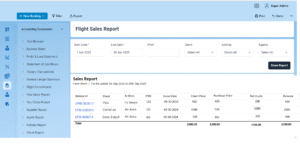
Full trip organization also means understanding how your agency is performing. Top travel software includes dashboards and reporting to analyze bookings, revenue, and customer trends. Agents and managers can pull reports on best-selling tours, most profitable destinations, or monthly revenue targets. This data-driven insight is crucial for growth.
Advanced analytics features often include:
- Sales tracking: Monitor which packages are booking fastest and which need promotion.
- Revenue forecasting: Estimate future bookings and cash flow based on historic trends.
- Customer segmentation: Identify market segments (family travel, business trips, etc.) to target promotions.
- Real-time dashboards: Visual charts of occupancy rates, sales pipeline, and KPIs update live.
As one guide notes, such analytics help agencies “track sales, bookings, revenue, and customer behavior in detail,” enabling continuous improvement. For example, an agency might discover that bookings spike for beach resorts in June, then use that intel to negotiate better rates or plan marketing.
By leveraging built-in analytics, agencies turn raw data into actionable plans. This ensures simplified trip organization isn’t just about the day-to-day, but also about strategic planning. Resource allocation, staffing, and inventory all become much more manageable when backed by clear insights. In combination, reports and real-time data give managers confidence that no opportunity is missed and no resource is underutilized.
Mobile and Multi-Channel Access: Organize Trips On-the-Go
Modern agencies need to be ready whenever and wherever customers connect. A travel agency software’s mobile app and multi-channel features ensure trip organization extends beyond the office. A robust platform lets agencies offer 24/7 online bookings on websites and apps. Customers can browse flights and accommodations on their phones and receive instant confirmations from the system.
Such mobile-friendly design is crucial today. With more travelers on smartphones, IV Trip and others optimize for mobile devices. Agents, too, benefit: they can check schedules, update bookings, or communicate with clients from any device. For instance, IV Trip’s app syncs seamlessly with its web version. An agent might finalize a group booking in the office, and a colleague on tour can view the itinerary on their tablet immediately.
A travel app on a smartphone shows how itinerary and bookings stay organized even on the go. Travel agency software’s mobile access (as shown here) lets agents and clients view itineraries, confirm reservations, and manage trips from anywhere.
Furthermore, multi-channel distribution is key. A top platform pushes inventory to multiple channels (e.g. Online Travel Agencies, social media campaigns, partner sites) in real-time. This means bookings from your own website, Facebook or a partner site all sync back into one system. No matter how a customer books, the unified system captures the data. In practice, this broadens sales reach and keeps every booking in your central system – further eliminating chaos.
IV Trip: Tailored Travel Agency Software for Bangladesh
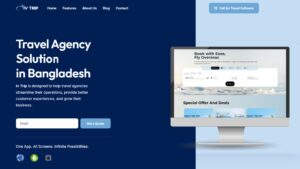
For Bangladeshi travel businesses, the locally developed IV Trip system exemplifies these capabilities. IV Trip is a cloud-based travel management system built with local needs in mind. It bundles every tool an agency needs into one platform, emphasizing ease of use and round-the-clock support. Key features include:
- Comprehensive Booking Engine: IV Trip aggregates flight, hotel, car, and tour reservations in one dashboard. Agents instantly access multiple suppliers and book for customers, cutting out manual data entry.
- Holiday Package Module: Agencies can create custom trip bundles. The system’s Holiday Packages feature lets you mix and match destinations, hotels, and activities, easily setting group pricing or dynamic offers. This flexibility keeps your packages fresh and conversion high.
- Powerful CRM & Automation: Every client profile, past bookings, and communication are logged. IV Trip can auto-send reminders and group customers by interests. It handles routine tasks – from invoicing to status updates – automatically, so agents serve clients faster and with fewer errors.
- Real-Time Analytics Dashboard: IV Trip provides advanced reporting on sales, occupancy, and revenue. Managers can see at a glance which tours sell best and forecast future demand, enabling data-driven decisions.
- Mobile-Friendly and Local Support: The platform is fully responsive for smartphones and tablets. Agents and customers stay connected on the go. Plus, IV Trip’s local team provides 24/7 support for Bangladeshi agencies, ensuring quick help when needed.
Overall, IV Trip “simplifies and automates your travel agency operations” by uniting these features in one system. Even small agencies can afford high-end tools thanks to flexible pricing and strong local service. By choosing IV Trip, Bangladeshi agents gain the benefits of a global travel management system with support tuned to their market.
Travel agencies no longer need to tolerate fragmented systems and paperwork. By adopting purpose-built travel agency software, firms can replace chaos with order. A centralized booking system, paired with an itinerary management system and integrated CRM, turns every booking into an organized, automated process. Agents save time, avoid errors, and keep travelers informed, while managers get clear insights to grow their business.
Ready to transform your travel operations? Contact Implevista today to learn how IV Trip’s travel agency software can organize your bookings from start to finish. Explore our features page or request a demo to see simplified trip organization in action. Subscribe to our blog for more travel tech insights, or read our related posts on travel technology and agency success.
Upscale your travel business with a seamless system – say goodbye to booking chaos and hello to streamlined trips!
FAQ: Simplified Trip Organization
- What is travel agency software? It is an all-in-one digital platform that automates a travel agency’s core tasks – including flight, hotel, and tour bookings, itinerary planning, accounting, and customer management. In other words, it replaces manual spreadsheets with a single system that handles reservations, invoicing, and client data in one place.
- How can travel agency software simplify trip organization? By centralizing all bookings and data. Instead of using separate tools for flights, hotels, and tours, everything lives in one dashboard. This unified system automatically syncs schedules, prices, and customer information, so agents no longer juggle mismatched sources. In practice, it eliminates fragmented workflows and reduces errors, making trip planning fast and organized.
- What is a centralized booking system? A centralized booking system is a unified engine where agents can book flights, hotels, car rentals, and more from a single interface. It connects to global distribution systems (GDS) and supplier feeds in real-time. The advantage is clear: availability and pricing from all sources update at once, so agents see one consistent view. This avoids double-bookings and ensures clients get accurate options instantly.
- What is an itinerary management system in travel? It’s a software tool that lets agencies build and manage complete travel itineraries easily. Using it, agents can compile multi-day trip plans by adding destinations, activities, and services into a structured timeline. Tour operators use itinerary software to “compile partners’ offers into routes” and present customers with cohesive trip plans. Features often include drag-and-drop day planners, templates for packages, and automated confirmations, so every detail is organized in one digital itinerary.
- Why do travel agencies need an itinerary management system? Travel bookings involve many moving parts (flights, transfers, hotels, excursions). An itinerary system automatically ties these elements together and formats them into a clear schedule. This automation saves agents time and prevents mistakes. For example, tour reservation software “frees managers from monotonous tasks and protects the company from mistakes”. Essentially, it creates professional, error-free itineraries that impress clients and simplify back-office work.
- How does travel agency software reduce booking chaos? By automating and integrating repetitive processes. It handles confirmations, sends reminders, and updates all records automatically. This means agents aren’t copying details by hand or juggling emails. As a result, the risk of human error falls dramatically. Automation also improves internal workflows – the team operates more efficiently and makes “fewer errors”. All critical information is centralized, so nothing slips through the cracks.
- Are travel agency software tools beneficial for small agencies? Yes. Many solutions (including IV Trip) offer tiered pricing and cloud-based access, making them affordable for agencies of any size. The software scales to fit your needs, whether you handle a handful of bookings or thousands. Even small agencies save time and reduce costs by moving away from manual processes. In fact, IV Trip specifically offers budget-friendly plans so even startups can use enterprise-grade features.
- What features should a travel agency software have? Look for an all-in-one travel management system with:
- An integrated booking engine for flights, hotels, tours, etc..
- A custom package/itinerary builder for creating tailored tours.
- Built-in CRM and communication tools to manage clients and follow-ups.
- Automation & workflow tools that handle invoicing, confirmations, reminders.
- Reporting/analytics dashboards to track sales and performance.
- Mobile access and multi-channel distribution so agents and customers can book anywhere.
- Can travel agency software be used on mobile devices? Absolutely. Leading travel platforms are fully responsive and often include a smartphone app. This lets agents update bookings and view itineraries while out of office, and lets customers access their travel plans on the go. For instance, IV Trip’s mobile-friendly design ensures both agents and clients can manage trips from any device. Mobile access is now a standard requirement for travel software.
- How does travel agency software improve customer satisfaction? By making service faster, more personalized, and error-free. Clients receive instant booking confirmations, real-time updates, and tailored recommendations. The software’s automation ensures no request is forgotten, and 24/7 booking portals let customers plan at their convenience. In short, travelers enjoy quicker communication, enhanced responsiveness, and personalized touches (like reminders or custom offers) – all leading to a better experience. Satisfied customers are more likely to return and recommend your agency.